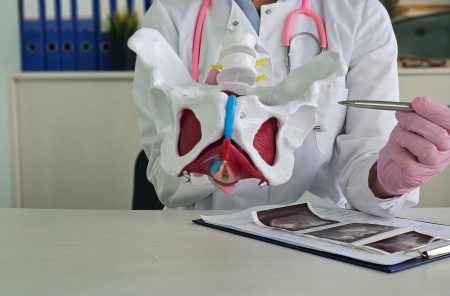
Robotic Abdominal Sacrocolpopexy is a minimally invasive, durable repair for pelvic organ prolapse. This advanced, cutting-edge procedure is the gold standard repair for vaginal vault prolapse. Performed using the da Vinci robotic platform, sacrocolpopexy is highly effective, offering patients quicker recovery, reduced pain, and lasting relief.
What is Pelvic Organ Prolapse?
Pelvic organ prolapse (POP) affects many individuals. In fact, one study found that one in three women will experience POP in their lifetime. For many individuals, the muscles and tissue that support the pelvic organs (vagina, uterus, bladder, rectum) weaken or become damaged, causing organs to “slip out” of position. When the pelvic floor cannot support these organs, it can significantly affect quality of life, leading to urinary/fecal incontinence, infection, kidney damage, and more.
Symptoms of Pelvic Organ Prolapse
Symptoms of POP include:
- Lower back pain
- Pelvic pressure or pain
- Inability to keep a tampon in
- Sexual dysfunction
- Issues emptying bladder or bowels
- Incontinence
- Bulging tissue near or inside the vagina
Robotic-Assisted Surgery for Pelvic Organ Prolapse
Robotic Abdominal Sacrocolpopexy can be used to treat vaginal vault prolapse, uterine prolapse, and complex or recurrent cases. The robotic sacrocolpopexy procedure uses surgical mesh or a graft of tissue to lift and support the pelvic organs to keep them in place. Using the robotic platform, your surgeon can make tiny incisions, smaller than a centimeter, operating with far more precision and less trauma than traditional open repair surgery. With small incisions, patients can expect less pain and quicker recovery.
Robot-assisted surgery does not mean that machines operate on autopilot. Rather, trained surgeons use the robotic technology to better visualize the surgical field and guide instruments with near-perfect precision, reducing trauma that could lead to longer recovery times and increased scarring.
Patients undergoing robotic abdominal sacrocolpopexy can expect outpatient or short stays in the hospital. Most patients can return home within 24 hours of the procedure and can resume light activity within one or two weeks. Full recovery typically occurs after four to six weeks.
Do I need a referral to see a TPMG OB/GYN?
While TPMG Obstetrics and Gynecology does not mandate referrals for pelvic disorders, some insurance plans do require referrals for specialists. Patients should contact their insurance to learn more about their insurance requirements. TPMG accepts most major commercial insurance plans. Many practices also accept Medicare, Medicaid, and Tricare as well. Visit our insurance page or call the office for plan-specific coverage.
Robotic Sacrocolpopexy in Hampton Roads, VA
Board-certified Obstetrician and Gynecologist, Dr. Jeffrey Morrison, DO, FACOG, offers the full spectrum of pelvic floor care at TPMG Obstetrics and Gynecology. He performs robotic sacrocolpopexy procedures at Port Warwick Ambulatory Surgery Center (Newport News), Sentara CarePlex (Hampton), Mary Immaculate Hospital (Newport News), and Sentara Williamsburg Regional Medical Center. His practice is among the highest-volume sacrocolpopexy centers in Hampton Roads.
Learn more about why our patients continually choose TPMG and how you can schedule your next appointment with TPMG Obstetrics and Gynecology.
The information shared is not intended to be medical advice, nor is it meant to replace a professional consultation with a healthcare provider. The opinions expressed do not necessarily reflect those of TPMG or its providers and physicians.