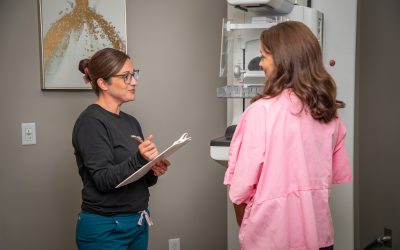
Radiology is a medical specialty that uses imaging to visualize internal bodily structures to diagnose and treat diseases, disorders, and injuries. Common imaging techniques include X-rays, CT scans, MRI scans, DEXA scans, PET scans, Mammograms, and Ultrasound.
Nearly every branch of medicine relies on radiology, including obstetrics, pediatrics, orthopedics, urology, gastroenterology, neurology, cardiology, urgent care, and more. The medical staff who operate the imaging equipment are called radiologic technologists, and the medical doctors who interpret the images and provide image-guided treatments are known as radiologists.
Diagnostic vs. Interventional Radiology
Radiology is divided into two categories based on whether the medical imaging is being used to diagnose or treat a condition.
- Diagnostic Radiology is primarily non-invasive and focuses on interpreting images and scans to identify diseases, disorders, and injuries.
- Interventional Radiology uses medical imaging to guide minimally invasive procedures, such as biopsies, steroid injections, and catheter placements.
Common Medical Imaging Techniques
Each imaging technique uses a different form of energy, such as electromagnetic radiation, sound waves, radio waves, and magnetic fields, to create images of the body’s internal structures.
- X-Rays – The oldest and most common diagnostic imaging technique, X-rays use very low-dose radiation to create images of bones and some organs.
- CT Scans – Computed tomography is a more advanced type of X-ray that takes multiple cross-sectional images of the body from different angles to create detailed 3D images of bones, organs, and soft tissues.
- Mammograms – A specialized type of X-ray used to create images of breast tissue. Advanced versions include 3D mammography (tomosynthesis).
- DEXA Scans – Often referred to as a bone density scan, DEXA scans use dual-energy X-ray absorptiometry to take detailed photos of bone structure and density, typically in the spine, hip, or forearm, to help diagnose and monitor conditions like osteoporosis.
- MRI Scans – One of the most heavily used diagnostic imaging techniques, magnetic resonance imaging uses a powerful magnetic field and radio waves to generate detailed images of the organs and soft tissues in the body.
- Ultrasound – Commonly used for examining internal organs, blood flow, and prenatal imaging, ultrasound uses high-frequency sound waves to create images.
Make a Radiology Appointment in Hampton Roads, VA
TPMG Imaging and Breast Center offers X-ray, Ultrasound, MRI, and CT scans, Bone Density (DEXA) scans, and both 2D and 3D Mammography in Newport News, Williamsburg, and Virginia Beach. Our radiologists are fellowship-trained, and we are committed to providing advanced imaging and image-guided treatments at a lower cost to patients than offered at local hospital systems.
To make an appointment for advanced imaging in Hampton Roads, call a TPMG imaging center near you.
- Newport News Imaging and Breast Center (757) 873-1936
- Williamsburg Imaging and Breast Center (757) 707-3510
- Virginia Beach Imaging Center (757) 938-3987
The information shared is not intended to be medical advice, nor is it meant to replace a professional consultation with a healthcare provider. The opinions expressed do not necessarily reflect those of TPMG or its providers and physicians