

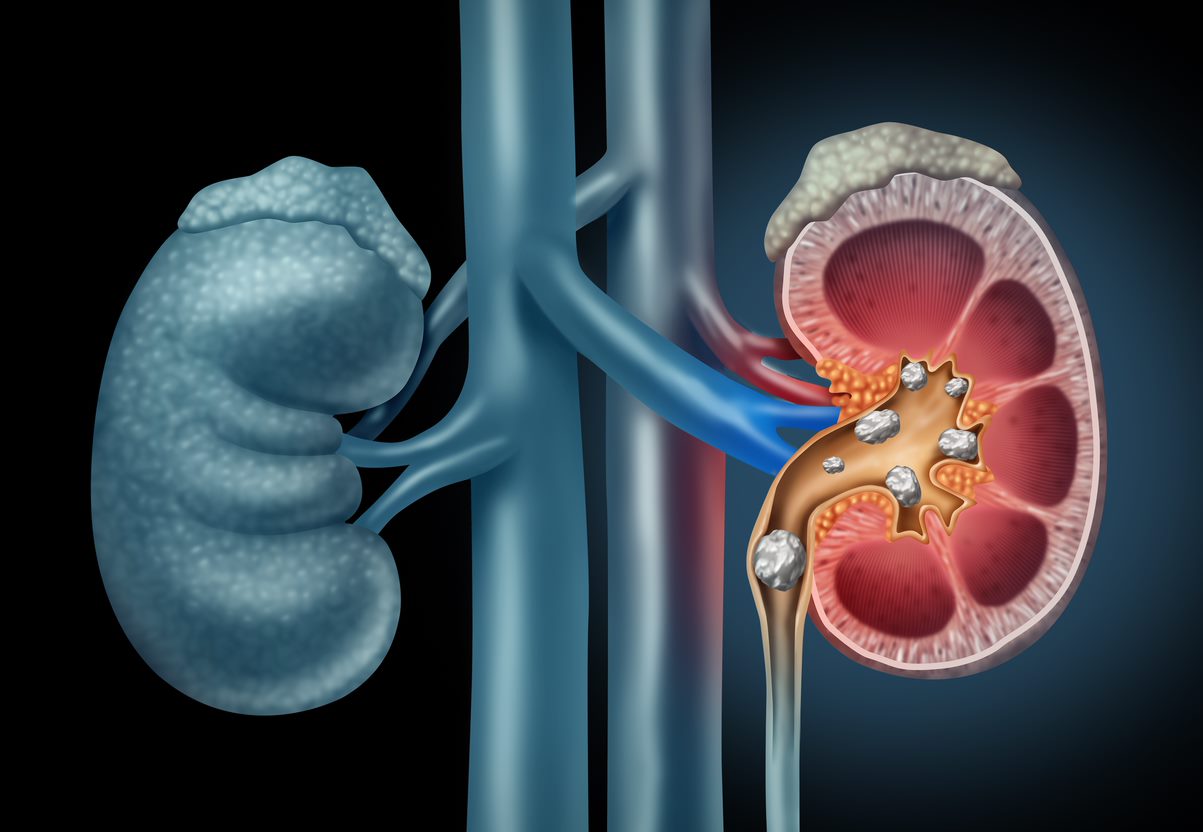
Kidney stones are hard deposits of minerals that are made from chemicals in the urine. Our urine is one of the ways our body removes its waste. When there is too much waste and too little liquid, crystals begin to form in the urine which can become larger and turn into kidney stones. The first step for treating patients with kidney stone disease is to make sure the kidney stones have either been passed or surgically removed.
Once patients are stone-free, their provider will discuss a kidney stone prevention plan. To prevent future kidney stones, patients may undergo metabolic management. This involves diagnostic testing to uncover the cause of your kidney stones. A 24-hour urine test will look at the levels of calcium,
oxalate, uric acid, urinary sodium, and other factors to help determine why your kidney stones formed. Blood work will reveal if increased levels of minerals lead to the formation of your kidney stone. Finally, crystal analysis is used to examine the kidney stone or a fragment of the kidney stone after it exits the body. Analyzing the stone can tell your doctor what kind of kidney stone it is and how the stone was formed.
Kidney Stone Prevention and Metabolic Management
Metabolic follow-up typically occurs about a month after you pass your kidney stone or surgical removal. For further consultation regarding metabolic management of kidney stones, make an appointment to see board-certified nephrologist, Sudip Ghimire, MD, FASN of TPMG Nephrology. To schedule an appointment, call (757) 599-3436.